Summary
Visions of cleansing and the coming King who enters humble on a donkey.
by Dr. David Silver3 min read
Read the Summaryby Dr. David Silver3 min read
Zechariah is a minor prophet, whose book is part of ‘The Twelve.’ His name means ‘The Lord remembers,’ and he reminds the people of God’s promises and coming Messianic kingdom. Zechariah is a priest who worked with Haggai to encourage Judah to rebuild the temple in 520 B.C. after the Babylonian exile. His book is the longest of the minor prophets, and it can be divided into two parts: chapters 1-8 have apocalyptic elements and eight visions given by the Lord; chapters 9-14 focus on the restoration of God’s people coming through the Messiah. There are fifty-four passages from Zechariah quoted in the NT in sixty-seven passages, many in the book of Revelation.
‘The Lord Almighty’ is a title used for God in Zechariah fifty-three times. God asked the people to return to him, and he would return to them (1: 3). The people repented (1: 6). Zechariah had four night visions in chapters 1-3 and four more in chapters 4-6. The first and eighth visions involved horses, like those in the book of Revelation. The Lord reassures Zechariah he will return to Jerusalem to show mercy (1: 16).
In the second vision, involving four horns and four craftsmen, the horns represent nations that revolted against Israel. The craftsmen are to terrify the nations that persecuted Israel. The number four here shows totality, not a defined number.
In the third vision, a man with a measuring line went to measure Jerusalem but was told God would be a wall of fire around it (2: 5). Many nations will be joined with the Lord (2: 11).
In the fourth vision, Satan accused the high priest, Joshua. The Lord rebuked Satan and Joshua had his filthy clothes removed and clean garments and a clean turban put on. Joshua and his associates were symbolic of things to come. The Lord will remove the sin of the land in a single day (3: 8-9).
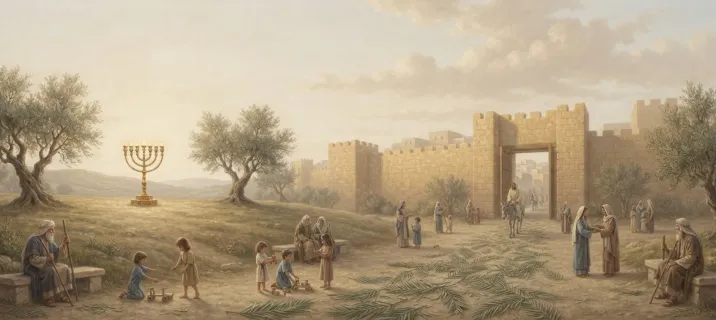
In the fifth vision, a gold lampstand and two olive trees were shown to Zechariah. This word was to Zerubbabel: “Not by might, nor by power, but by my Spirit, says the Lord Almighty (4: 6). Zerubbabel laid the foundation of the temple, and his hands will complete it (4: 8). The two olive trees represent Zerubbabel and Joshua, anointed to serve the Lord (4: 14).
The sixth vision was a flying scroll. It had writing on both sides which identified sin in the land and a curse for those who disobey. Similarly, the seventh vision was a woman in a basket who represented wickedness. The basket was taken to Babylon. In the eighth vision the spirits of the Lord went out to bring judgment to all the earth. The second half of chapter 6 shows that priest and king will be united in one person, named the Branch (6: 12-13).
In chapter 7, people came to ask about fasting and feasting, since they had fasted for seventy years since the temple was destroyed. God revealed to them that their fasting and feasting were selfish and not done in true devotion to God. God shared through Zechariah what he wanted from his people(like Micah 6: 8). In chapter 8, God promises to bless Jerusalem again. He will bring the nations also (8: 22-23).
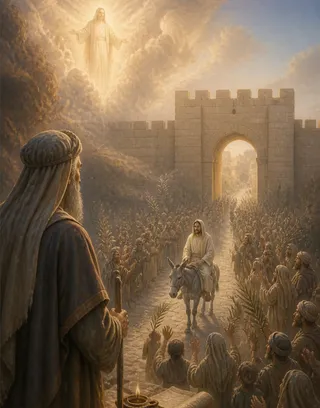
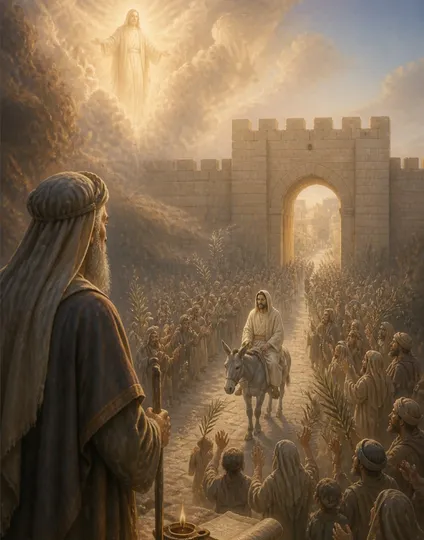
In chapters 9-14 the oracles become prominent. In chapter 9, there is judgment proclaimed against Israel’s enemies. Tyre, in Phoenicia, was an island stronghold and almost impenetrable. In 9: 4, God says he will destroy her power (Alexander the Great fulfilled this prophecy almost two centuries later). In 9: 9, this well-known verse is fulfilled during Christ’s triumphal entry (Matthew 21: 4).
In an interesting metaphor regarding shepherds, we find another popular prophecy that was fulfilled regarding Judas Iscariot (Matthew 26: 15). Israel’s enemies will surround them in the future, but the Lord will protect them (12: 3-5; 14: 2-3). Israel will also mourn for the one they pierced (12: 10; see Revelation 1: 7). Jesus quoted 13: 7 at the last supper, stating he was the shepherd and his disciples would be scattered. On that day, those who serve the Lord will be holy to him (14: 20).
Structure
Chapters 1–6
Horses patrolling the earth, horns and craftsmen, a city without walls, a high priest reclothed, a lampstand and two olive trees, a flying scroll, a woman in a basket, and four chariots.
Chapters 7–8
Seventy years of fasting examined and found self-serving; God promises to return to Zion, and the nations will come with them.
Chapters 9–11
Judgment on Israel’s enemies, a king coming humble on a donkey, and a rejected shepherd valued at thirty pieces of silver.
Chapters 12–14
They will look on Me whom they have pierced, a fountain opened for sin, the shepherd struck and the sheep scattered, and the Lord reigning over all the earth.
Key Themes
01
The prophet’s name is the message: the Lord has not forgotten His promises.
02
Filthy garments removed, and the sin of the land taken away in a single day.
03
Not by might nor by power, but by My Spirit, says the Lord.
04
The Branch will build the temple and sit as priest on His throne.
05
Many peoples will join themselves to the Lord and be His people.
The Challenge We Face
The New Testament draws on this book constantly. Your king comes to you, humble and riding on a donkey, is read out on Palm Sunday. Thirty pieces of silver thrown to the potter is quoted of Judas. Strike the shepherd and the sheep will be scattered is quoted by Jesus on the night He was betrayed.
And they will look on Me whom they have pierced appears in John’s gospel and again in Revelation.
Apply Scripture
God remembers promises that look long overdue.
Cleansing is something God does to us, not something we achieve.
The work gets done by His Spirit, not by our strength.
Religious habits can become about us without our noticing.
The King came humbly the first time, and will reign over all the earth.
Study guides
You've seen the big picture. Now explore the book verse by verse with our practical Bible Study Guide.
Related Resources