Summary
The Lamb who was slain reigns, and God makes all things new.
by Dr. David Silver4 min read
Read the Summaryby Dr. David Silver4 min read
Revelation is the last book in the NT, written by the Apostle John in the 90’s A.D. He was exiled to the island of Patmos but was given this revelation to share. It is of the apocalypse genre and could be considered a prophetic letter. It was written to seven churches in Asia Minor to encourage them to remain faithful in their witness despite persecution, suffering, and spiritual warfare. God is sovereign over history, which flows out of the heavenly throne room scenes in chapters 4-5. There are cycles of seven seals, trumpets, and bowls, which recapitulate judgments that crescendo. There is much symbolism and allusions from the OT.
In the prologue, 1:1-20, the message is given from God to Jesus to angels to John to Christians. There is a blessing for those who read this book (1:3). After a standard greeting, and mention of the Trinity, John shares the gospel. He ends this section with a depiction of the risen Christ (1:12-16).
Chapters 2-3 are seven letters written to churches in Asia Minor: Ephesus, Smyrna, Pergamum, Thyatira, Sardis, Philadelphia, and Laodicea. In most of these letters he mentions strengths and weaknesses of that particular church, characteristics of Christ, exhortations, and promises.
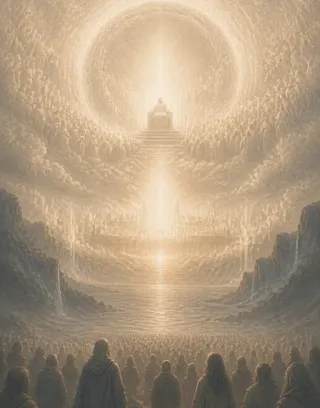
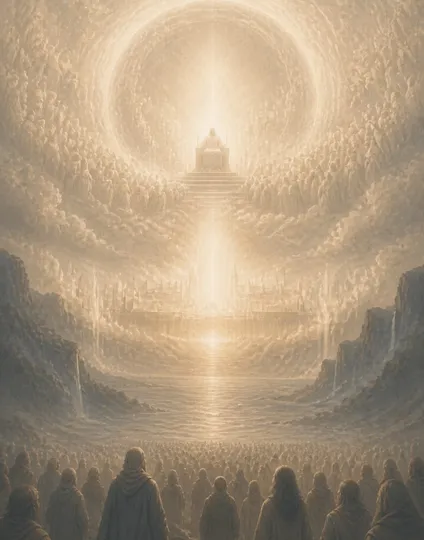
Chapters 4-5 are a heavenly throne room scene. God is seen on his throne, but he is indescribable. Christ is worthy to open the scroll since he accomplished salvation for his people. There is much praise, worship, and honor given to God and the Lamb.
The seals are opened in chapters 6-8:5. Unbelievers are punished and believers are to endure persecution. Images from the OT are woven together to depict judgment. God seals his servants to protect them while they endure suffering (7:3).
The trumpets are sounded beginning in 8:6 and the last one in 11:15-19. These are reminiscent of the Egyptian plagues. The rest of chapters 10-11 are an interlude. In chapter 10, John is given a scroll to eat as in Ezekiel 2-3. In chapter 11, the two witnesses resembling Moses and Elijah represent the church and its witness.
In chapters 12-14, there are seven symbolic histories. In chapter 12, the histories of the dragon and the woman represent the battle between Satan and the church. Satan attempts to destroy the Messianic child, but he is unsuccessful until the child’s mission is accomplished. Then the other two beasts combine with Satan to form a counterfeit Trinity. They try to imitate the work of Christ and attempt to draw people to worship them. In chapter 14, the church is marked, the gospel proclaimed, and Babylon (those opposed to God) is fallen.
We learn more about God’s character in chapter 15. Chapter 16 encapsulates the bowl judgments. God’s punishments are intensifying, and the battle of Armageddon is described in 16:16. A severe earthquake occurs and huge hail boulders fall on people (16:21).
In chapters 17-18, Babylon (the prevailing economic-religious system in alliance with the state) falls. She rode the beast and collaborated with the beast to deceive, but it led to her downfall. Chapter 18 shares the responses to that fall. The merchants will weep and mourn over her (18:11).
In chapter 19, praise ensures due to God’s judgment and salvation. The church is made ready and Christ returns. In chapter 20, the first resurrection and the second death are discussed. Believers will avoid the second death and participate in the first resurrection when they die physically. The millennium is mentioned here (20:2-6). This period is controversial but may represent the interadvental age (time between Christ’s comings).
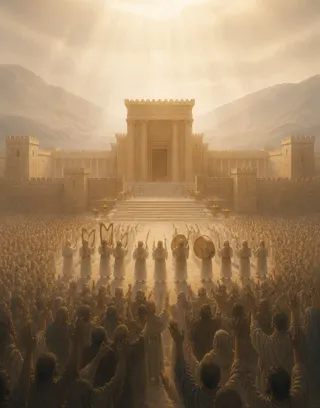
Chapter 21 presents a pleasant surprise as the church is seen whenever the New Jerusalem comes down. God has planned it so his church is with him forever and ever. The glory and honor of the nations are brought in, but nothing impure will ever enter.
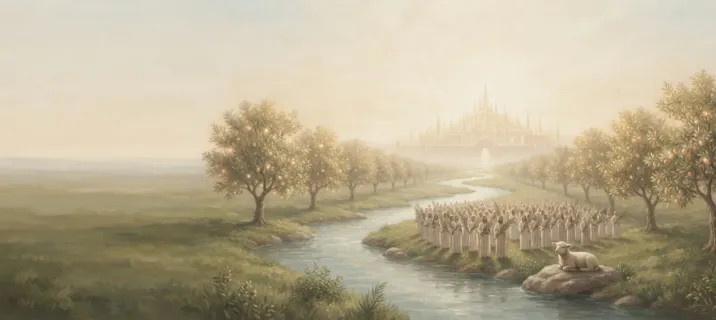
Chapter 22 closes the book with a river of life and the tree of life present. The throne of God will be in the city and there will be no need of the sun or a temple. Having started with a blessing, the book ends with the warning of a curse for anyone who adds or takes away from the words in this book. The Lord is coming soon (22:20).
Structure
Chapter 1
A blessing on those who read it, and a vision of one like a son of man among the lampstands, whose face is like the sun shining in full strength.
Chapters 2–3
To Ephesus, Smyrna, Pergamum, Thyatira, Sardis, Philadelphia and Laodicea — commendation, rebuke, and a promise to the one who overcomes.
Chapters 4–5
A throne, and a scroll no one can open, until the Lion of Judah appears as a Lamb looking as if it had been slain — and heaven sings that He is worthy.
Chapters 6–16
Three cycles of judgment, each more severe, with interludes in which God’s servants are sealed and His witnesses testify.
Chapters 17–20
The great city that traded in everything judged, the rider on the white horse, the defeat of the dragon and the beasts, and the final judgment before the throne.
Chapters 21–22
A new heaven and a new earth, the city coming down, no more death or mourning or crying or pain, a river and a tree of life — and the promise, I am coming soon.
Key Themes
01
The central image: the conquering King is the one who was slain.
02
Every scene of crisis opens onto a scene of worship.
03
The theme for the churches: hold on under persecution and spiritual warfare.
04
History flows out of the throne room, not out of the empires.
05
The Bible ends with the curse of Genesis 3 undone.
The Challenge We Face
The book names itself in its first line: the revelation of Jesus Christ. He is the faithful witness, the firstborn from the dead, the ruler of the kings of the earth, the Alpha and the Omega.
The scroll of history can be opened by one person only, and He is introduced as the Lion of the tribe of Judah and then seen as a Lamb who was slain. The Bible closes with His promise — surely I am coming soon — and the church’s answer: Amen. Come, Lord Jesus.
Apply Scripture
The one who was slain is the one who reigns.
Churches are judged by faithfulness, not by size or reputation.
Worship is the right response to what you cannot control.
Every empire opposed to God falls; none of them last.
God is making all things new, and will wipe away every tear.
Study guides
You've seen the big picture. Now explore the book verse by verse with our practical Bible Study Guide.
Related Resources