Summary
A short word of judgment on pride, and the Lord's sure kingdom.
by Dr. David Silver2 min read
Read the Summaryby Dr. David Silver2 min read
Obadiah is a minor prophet whose book is one of ‘The Twelve.’ It is the shortest book in the OT. It was a prophecy against Edom (descendants of Esau) who had mistreated the Israelites (descendants of Jacob) for centuries. It may have been written after the Babylonian exile in 586 B.C., but before Babylon attacked Edom in 553 B.C. The first part (vv. 1-9) of the book relays God’s judgment against Edom; part 2 in vv. 10-14 explain Edom’s sins against Israel; part 3 (vv. 15-21) end the book discussing the day of the Lord.
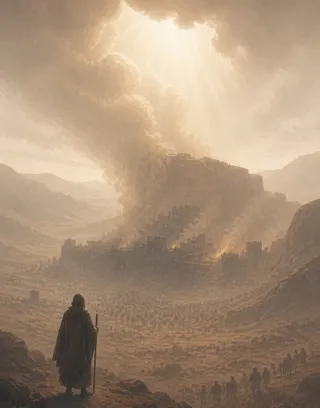
The vision of Obadiah is God denouncing Edom for ways they mistreated God’s people. Edom’s pride (v.3) was a major flaw which led to their downfall. Edom was east of Judah and was a mountainous region which was difficult to attack. They felt invulnerable. The Lord, however, was able to bring them down (v.4). God was going to judge Edom for coming against his people. Disaster awaited them (v.5). Esau will be ransacked and pillaged (v.6). Allies and friends will deceive them (v.7). Their warriors will be terrified, and everyone will be cut down in the slaughter (v. 9).
Part 2 shows the violence Edom committed against his brother (v. 10). Previously, after Israel left Egypt in the exodus, Edom did not allow them to cross their region (Numbers 20: 14-21). Later in the eighth century B.C., before Assyria conquered the northern kingdom of Israel, Edom attacked Israel while they were being invaded (2 Chronicles 28: 16-21). Two centuries later, during the Babylonian exile of Judah, Edom attacked Israel again, cutting down its fugitives and seizing their wealth (vv. 11-14). They rejoiced at Israel’s misfortune, not realizing it would lead to their own (Psalm137: 7-8).
Part 3 gives the final word on the matter. As they treated Israel, they would be treated (v. 15). The house of Esau will be no more while Israel will be protected by God (v. 17-18). Others will take over the mountains of Edom, while the kingdom is the Lord’s (v. 21). The people of Edom disappeared from the face of the earth by 70 A.D. when Titus destroyed the temple and Jerusalem. Thus, the prophecy came to fruition.
Structure
Verses 1–9
Though you soar like the eagle and nest among the stars, I will bring you down — the mountain fortress is not safe.
Verses 10–14
On the day Jerusalem fell, Edom stood by, gloated, looted, and cut down the fugitives — violence against his own brother.
Verses 15–21
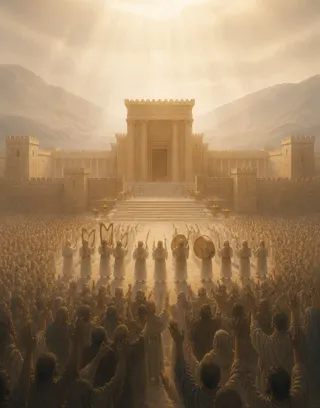
As you have done, it will be done to you; the house of Jacob will possess its inheritance, and the kingdom will be the Lord’s.
Key Themes
01
The deceitfulness of a heart that believes itself untouchable.
02
Edom descends from Esau; this is a family wound centuries old.
03
As you have done, it will be done to you.
04
Near for all nations, not only for Edom.
05
The shortest book in the Old Testament ends on the throne.
The Challenge We Face
The book ends with the words “and the kingdom will be the Lord’s” — the hope every prophet is reaching for and the kingdom Christ came announcing.
It also shows what gloating over a brother’s disaster deserves, which makes the command to love your enemies, and the one who prayed for those who crucified Him, stand out all the more sharply.
Apply Scripture

Pride tells you that you are beyond reach, right up until you are not.
Standing by while someone is destroyed is not neutrality.
Taking pleasure in another’s downfall invites your own.
God notices how we treat people in their worst moment.
However things look, the kingdom belongs to the Lord.

Study guides
You've seen the big picture. Now explore the book verse by verse with our practical Bible Study Guide.
Related Resources