Summary
God's justice against a violent empire, and refuge for those who trust Him.
by Dr. David Silver2 min read
Read the Summaryby Dr. David Silver2 min read
Nahum is a minor prophet whose book is part of ‘The Twelve.’ He ministered between the Assyrian capture of Thebes (3: 8-10) in Egypt in 663B.C. and the final destruction of Nineveh (capital of Assyria) in 612 B.C. He was in Judah around the time of King Josiah as the festivals mentioned in 1:15 indicated. His contemporaries were Habakkuk, Zephaniah, and Jeremiah. Nahum declares Nineveh’s doom and reassures Judah of God’s sovereignty. Jonah had preached in Nineveh (the whole city repented), and the city was spared in the first half of the eighth century B.C. But Assyria had become a world power which conquered the northern kingdom of Israel in 722 B.C., and now God is warning about their downfall. One possible outline is: In chapter 1 we see the character of God; in chapter 2 the Lord judges Nineveh; in chapter 3, there is a woe over Nineveh.
In chapter 1, we see multiple facets of God’s character: he is jealous, avenging, filled with wrath, slow to anger, great in power, a punisher of the guilty, good, a refuge in times of trouble, caring of those who trust in him. He will make an end of Nineveh (1: 8). The Lord says they will be cut off and pass away (1: 12) and he will prepare their grave since they are vile (1: 14).
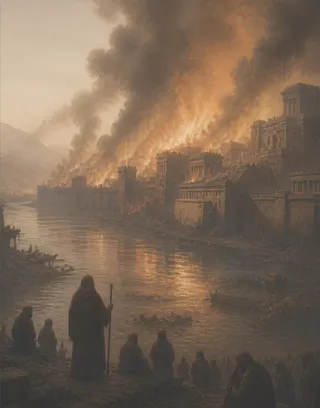
In chapter 2, Nahum goes into detail regarding the fall of Nineveh. It is decreed that the city be exiled and carried away (2: 7). She is pillaged, plundered, stripped (2: 10). The Lord Almighty is against them, and the sword will devour (2: 13).
In chapter 3, a woe is pronounced against Nineveh. It is a city of blood (3:1) who enslaved nations by her prostitution and peoples by her witchcraft (3: 4). The Lord is against them (repeated) and will treat them with contempt (3: 5-6). Nineveh is in ruins (3: 7). Nahum’s name means comfort (as does Noah’s), and he uses a pun in 3: 7. Nahum’s prophecy is a comfort to Judah though. Nahum ends his book with a taunt of the king of Assyria: “Nothing can heal your wound; your injury is fatal. Everyone who hears the news about you claps his hands at your fall, for who has not felt your endless cruelty? (3: 19)”
Structure
Chapter 1
Jealous and avenging, slow to anger and great in power, good and a stronghold in the day of trouble — and no refuge at all for Nineveh.
Chapter 2
The siege described in detail: chariots in the streets, the city plundered, stripped and empty.
Chapter 3
The cruelty Assyria built its empire on is read back to it, ending with a taunt — everyone who hears of your fall claps their hands.
Key Themes
01
The empire that terrorised the nations is itself brought down.
02
Nahum’s name means comfort, and this is a comfort to Judah.
03
Slow to anger and great in power; both are true at once.
04
The Lord is good, a stronghold for those who take shelter in Him.
05
No nation is too strong to answer for what it has done.
The Challenge We Face
Nahum quotes the same line Isaiah does — the feet of him who brings good news, who proclaims peace — and Paul applies it to those who preach the gospel.
The book insists that God will not acquit the guilty. The cross is where that insistence and God’s mercy meet: the guilty are not simply let off, because someone else bore it.
Apply Scripture

God’s patience is not indifference.
He is a stronghold for those who take refuge in Him on the day of trouble.
Power built on cruelty does not last.
Good news for one people can be judgment for another.
Justice delayed by God is not justice abandoned.

Study guides
You've seen the big picture. Now explore the book verse by verse with our practical Bible Study Guide.
Related Resources