Summary
Honest grief over a ruined city, anchored in mercies new every morning.
by Dr. David Silver3 min read
Read the Summaryby Dr. David Silver3 min read
Lamentations is a book of poetry, traditionally written by Jeremiah, just after the fall of Jerusalem to Babylon and the exile in 586 B.C. It is a part of the Megilloth, scrolls read during Jewish Festivals. This book was read during Tisha B’av, which commemorated the destruction of the Jerusalem temple in 586 B.C. and 70 A.D. The book contains five poems (chapters 1-5). Chapters 1-4 are acrostic (or alphabet) poems, where each verse begins with the next letter of the alphabet. Chapter 3 has sixty-six verses, so each consecutive letter begins three verses. Chapter 5 also has twenty-two verses, but the acrostic format is dropped. Laments are expressions of mourning and complaints about suffering. Though despair and anguish are revealed, it is apparent in chapter 3 that hope is still present despite the circumstances. God is sovereign, forgiving, and able to restore. The devastating event of the Babylonian exile came after five centuries of prophets warning God’s people to obey the covenant and to be faithful to God. We see laments in about half of the Psalms and in the book of Job (though Job was more innocent in his suffering).
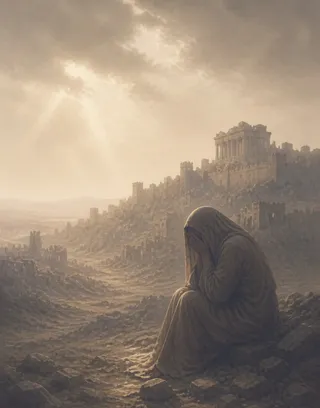
In chapter 1, Jerusalem is like a grieving widow. “All the splendor has departed from the Daughter of Zion (1: 6).” All this happened because Jerusalem has sinned greatly (v.8). The recurring refrain in this first poem is, ‘There is none to comfort.’
In chapter 2, the Lord’s anger is the repeating theme. The wall around Jerusalem is torn down and laments (v. 8). The people are crying out and even the wall is told to let its tears flow (v. 18). Children are hungry and faint in the streets of the city (v. 11). They ask for food and ebb away in their mother’s arms (v. 12). God is mentioned as the cause for Jerusalem’s downfall more than forty times in this chapter.
In chapter 3, the author lost hope (v. 18) and then called to mind (v. 21) God’s character to have hope again. The Lord may bring grief, but he will show compassion due to his unfailing love (v. 32). Let us return to the Lord (v. 40). You came near when I called you, and you said, “Do not fear (v.57).” The author also asks for payback and destruction on his enemies (vv. 59-66), like the imprecatory Psalms.
In chapter 4, the author says their punishment is worse than Sodom’s (v. 6). Woman cannibalized their children (v.10), which was a curse mentioned in Deuteronomy for breaking the covenant. Jerusalem’s punishment will end; he will not prolong their exile (v. 22).
In chapter 5, the author relays what the country has lost due to the exile: their inheritance (v.2); family (v.3); access to food and water (v.4); rest (v.5); freedom (v. 8); health (v.10); safety (v.11); dignity (v.11); autonomy (v.14); joy (v.15); the kingship (v. 16); peace (v. 17); their relationship with God (v,.20, 22). The author is asking for restoration and renewal (v.21), but he is not sure what the future holds as the book ends.
Structure
Chapter 1
Jerusalem as a widow, deserted and weeping, with the refrain that there is none to comfort her.
Chapter 2
The wall thrown down, children fainting in the streets, and God named more than forty times as the one who did it.
Chapter 3
The centre of the book: a man who has lost hope deliberately remembers God’s steadfast love, which never ceases.
Chapter 4
The horrors of the siege, and the assurance that the punishment will come to an end.
Chapter 5
An inventory of everything lost, and a final prayer that God would bring them back — left unanswered.
Key Themes
01
Grief given language, structure, and a place in Scripture.
02
The city does not claim to be innocent; the disaster is named as the fruit of sin.
03
The only hope in the book sits in the exact centre of it.
04
The Lord is acknowledged as the author of the judgment, not merely its witness.
05
The book ends with a question, which is honest about where the people are.
The Challenge We Face
The steadfast love that never ceases, in the middle of the book’s darkest poem, is the mercy that reaches its fullest expression at the cross.
And the man of sorrows of chapter 3, bearing a judgment he describes in the first person, prefigures the one who sat down over this same city and wept, and then bore its judgment Himself.
Apply Scripture

Grief does not have to be tidied up before it is brought to God.
Naming loss honestly is part of healing, not a failure of faith.
Hope is often something you deliberately call to mind, not something you feel.
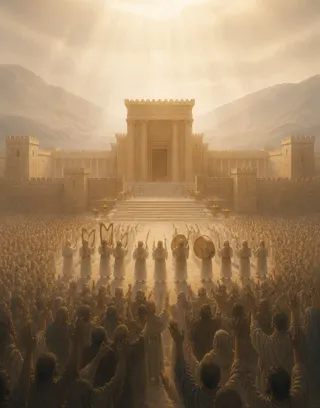
God’s mercies are new every morning, including this one.
Some prayers end without an answer yet, and are still worth praying.

Study guides
You've seen the big picture. Now explore the book verse by verse with our practical Bible Study Guide.
Related Resources