Summary
Contending for the faith once for all delivered to the saints.
by Dr. David Silver2 min read
Read the Summaryby Dr. David Silver2 min read
Jude is a NT epistle, written by Jude, the Lord’s half-brother, and brother of James, who called himself a servant of Jesus Christ. Some consider it the most neglected book of the NT. It may have been written about 65 A.D., but the recipients are not known. It is remarkably similar to 2 Peter 2, so it is debated which one used the other as a source. Jude was concerned about false teachers who came into the church, denying Jesus Christ and changing the grace of God into a license for immorality (verse 4). He was going to write about salvation but decided to exhort believers to contend for the faith.
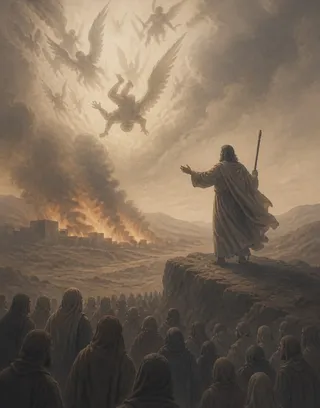
Jude cites examples of God’s judgment on apostasy, including the Jews delivered out of Egypt who did not believe (verse 5), demons who abandoned heaven and are bound with everlasting chains for judgment (verse 6), and Sodom and Gomorrah who gave themselves up to sexual immorality (verse 7).
These false teachers pollute their own bodies, reject authority, and slander celestial beings (verse 8). Even Michael, the archangel, did not slander the devil when disputing about the body of Moses, but said, ‘The Lord rebuke you (verse 9).’ These men have taken the way of Cain, rushed into Balaam’s error, and been destroyed in Korah’s rebellion (verse 11).
These false teachers are shepherds who feed only themselves, clouds without rain, autumn trees without fruit, wild waves of the sea foaming up their shame, wandering stars for whom blackest darkness has been reserved (verses 12-13). Enoch prophesied about them that they will be convicted of their ungodly acts done in ungodly ways (verse 14-15). They are grumblers and fault-finders (verse 16). The apostles warned about scoffers who would follow their own ungodly desires in the last times (17-18). They do not have the Spirit (verse 19).
Then Jude gave advice for believers to avoid the false teaching and ungodly lifestyle he warned against. Believers were to build themselves up in their holy faith and pray in the Holy Spirit. They were to keep in God’s love (also mentioned in verse 1). The mercy of the Lord Jesus Christ would bring them to eternal life (verses 20-21). Believers were to show mercy, help others going astray carefully (verses 22-23). Jude ends with a beautiful doxology.
Structure
Verses 1–4
Jude meant to write about salvation and had to write about danger instead: certain people have slipped in who turn grace into licence.
Verses 5–16
Warnings from Israel, the angels and Sodom; Michael disputing with the devil; the way of Cain, Balaam’s error and Korah’s rebellion; clouds without rain and wandering stars.
Verses 17–23
Remember what the apostles said; build yourselves up in your faith, pray in the Spirit, keep yourselves in God’s love — and be merciful to those who doubt.
Verses 24–25
To Him who is able to keep you from stumbling and to present you before His glorious presence without fault and with great joy.
Key Themes
01
Not quarrelling, but holding on to what was handed down.
02
Turning forgiveness into permission is the error Jude names first.
03
Historical examples stacked up to show that God has acted before.
04
Be merciful to doubters; snatch others from the fire.
05
The letter opens and closes with God keeping His people.
The Challenge We Face
Jude calls himself a servant of Jesus Christ and a brother of James — not a brother of Jesus, though he was.
The letter ends with one of the great doxologies of Scripture: to Him who is able to keep you from stumbling and to present you before His glorious presence without fault and with great joy — to the only God our Saviour be glory, majesty, power and authority, through Jesus Christ our Lord.
Apply Scripture

The faith was delivered once for all; it is received, not reinvented.
Grace is never a licence to sin.
Build yourself up, pray, and keep yourself in God’s love — the defence is active.
Be merciful to those who doubt rather than dismissive.
He is able to keep you from stumbling.

Study guides
You've seen the big picture. Now explore the book verse by verse with our practical Bible Study Guide.
Related Resources