Summary
The day of the Lord, a call to return, and the promise of His Spirit.
by Dr. David Silver2 min read
Read the Summaryby Dr. David Silver2 min read
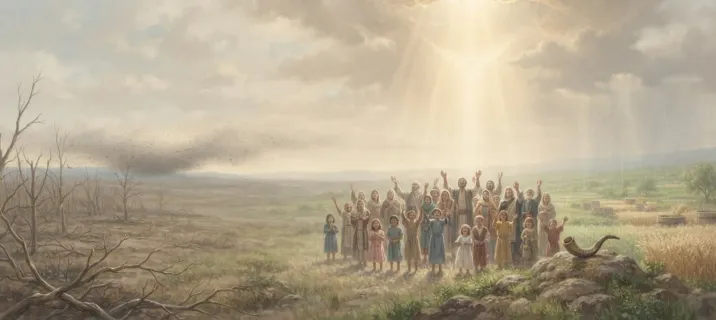
The book of Joel is a minor prophet, one of ‘The Twelve.’ His name means Jehovah is God. There is no mention of kings, Assyria, or Babylon, and the date of writing is inconclusive. Some scholars feel it was written early, in the ninth century B.C.; others say that it was post-exilic, after 516 B.C. It is written in the form of a lament after an actual locust invasion of the Promised Land did extensive damage. Chapter 1 describes the locust plague and the devastation it caused. In chapter 2, the Day of the Lord signaled an impending disaster. The Lord himself will come with his own heavenly army in holy war against evil. Solomon prayed that God would hear the prayer of his people in times of locust outbreaks or other disasters (2 Chronicles 6: 28). There is a clear call to repentance in 2: 13. In 2: 18 -3: 21 is the Lord’s answer to these threats and his salvation. In 2: 28-32 we find a passage quoted during Pentecost when Peter preached that first sermon in the book of Acts (Acts 2: 17-21). The book of Joel ends with the nations being judged and God protecting his people.
A locust invasion in an agricultural society is catastrophic. It affects trees, crops, animals, and the people. Joel calls for lamentation in 1: 8-20, and for prayer to the Lord (1: 14, 19). The priests, farmers, and elders are instructed to grieve, fast, and pray.
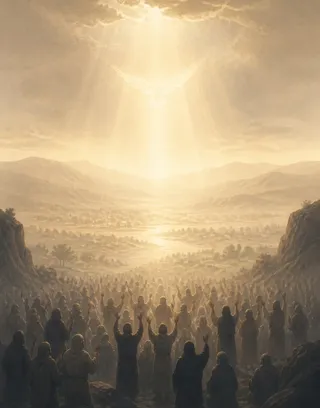
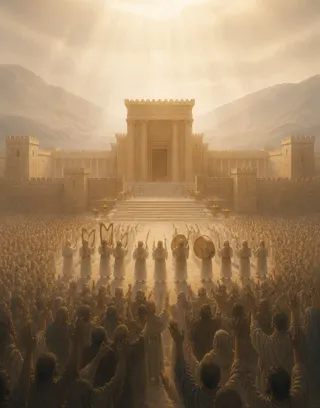
Joel calls for an alarm, a blowing of the trumpet in Zion (2: 1) due to the coming of the day of the Lord. It is a day of darkness and gloom with another army coming (2: 2). This is not a locust army, but rather the army of the Lord (2: 11). The Lord calls for repentance to avoid calamity (13). Joel repeats the alarm in 2: 15 (an inclusio).
Then the Lord spoke kindly to his people. For the Lord has done great things (2: 20-21). He restores the foliage (2: 22). Never again will God’s people be shamed (2: 26-27). Then Joel describes the work of God in sending his Spirit (2: 28)- this will lead to prophesying, dreams, visions, wonders, and salvation. Peter quotes this passage as a real-time occurrence during his sermon at Pentecost. We see that everyone who calls on the name of the Lord will be saved and those whom the Lord calls (2: 32).
God will judge all the nations that mistreated Israel and will restore the fortunes of his people (3: 1-2). In 3: 9-14, there are fifteen imperatives given to the nations. God is the avenger of his people, for the day of the Lord is near (3: 14). Never again will foreigners invade Jerusalem (3: 17). God will pardon Judah and it will be inhabited forever. The Lord dwells in Zion (3: 20-21).
Structure
Chapter 1
A plague strips the land bare; priests, farmers and elders are called to fast, mourn and cry out to the Lord.
Chapter 2:1–17
Blow the trumpet in Zion: a far greater army is coming, and the call is to rend your heart and not your garments.
Chapter 2:18–32
The years the locusts ate are restored, and God promises to pour out His Spirit on all flesh.
Chapter 3
God pleads the cause of His people, the nations are summoned to the valley of decision, and the Lord dwells in Zion.
Key Themes
01
A theme running through the book: near, and darker than any locust swarm.
02
Return with all your heart; God is gracious and slow to anger.
03
God promises to repay the years the locusts have eaten.
04
Prophecy, dreams and visions given to sons and daughters, old and young, servants included.
05
Everyone who calls on the name of the Lord will be saved.
The Challenge We Face
On the day of Pentecost Peter stands up and says this is what was spoken by the prophet Joel, and quotes the whole passage about the Spirit poured out on all flesh.
Paul then takes Joel’s promise — everyone who calls on the name of the Lord will be saved — and applies it directly to calling on Jesus.
Apply Scripture
Disaster can be a summons to pray rather than only something to survive.
Rend your heart, not your garments; God sees past the gesture.
God can restore the years that were eaten.
The Spirit is given to ordinary people, not only to leaders.
Anyone who calls on the Lord will be saved.

Study guides
You've seen the big picture. Now explore the book verse by verse with our practical Bible Study Guide.
Related Resources