Summary
God's relentless love for an unfaithful people, told through a prophet's marriage.
by Dr. David Silver3 min read
Read the Summaryby Dr. David Silver3 min read
Hosea, like the other minor prophets, was part of “The Twelve,” a scroll with all twelve minor prophets on it. They were called minor due to their length, not their importance. Hosea was called to marry an unfaithful wife as a picture of Israel’s unfaithfulness to God, and God’s forgiving love. He ministered from about 760 B.C.- 725 B.C., warning Israel that they would be disciplined by the Lord and conquered by Assyria, which happened more completely in 722 B.C. Hosea’s contemporaries were Jonah, Isaiah, Amos, and Micah.
The word ‘return’ is a key word in the book as Hosea commands Israel to return back to God over twenty times. They are called to repent. Hosea uses metaphors, wordplays, and allusions to prior national history. He employs these devices more than the other prophets. The book can be categorized into two sections: chapters 1-3 discussing Hosea’s marriage and family as a metaphor; chapters 4-14 made up of prophetic speeches to Israel and Judah.
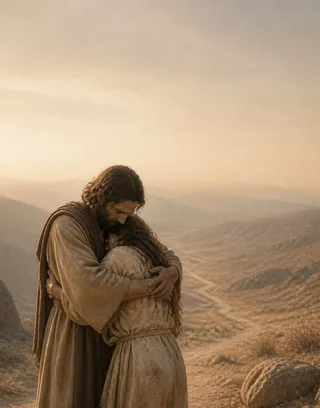
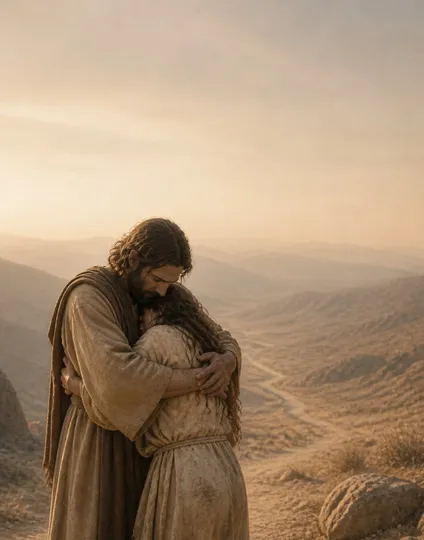
The Lord commanded Hosea to take an adulterous wife and children of unfaithfulness because Israel was guilty of spiritual adultery (Hosea 1: 2). Hosea married Gomer and had three children by her. Each had names with dual meanings (1: 4-11; 2: 23). God will remove the Baals from the lips of his people (2: 17). Hosea bought back his wife for fifteen shekels of silver and barley when she was auctioned. He was to love her as God loved the Israelites, though they were unfaithful.
The Lord brings a case against Israel in chapter 4. Israel is destroyed for lack of knowledge (4: 6). The priests and the people alike sin against the Lord (4: 7-9). A key word in this chapter is prostitution, which Israel commits by its idolatry. In chapter 6, Hosea again encourages a return to the Lord (6: 1), a revival and restoration (6: 2). Israel has broken the covenant (mentioned five times in this book) and were unfaithful (6: 7). Israel does not return to the Lord (7: 10). God longs to redeem them, but they speak lies against him (7: 13). They are sowing and reaping unprofitable things. In chapter 9, God summarizes how he going to punish Israel for her sins. In chapters 4-10, God summarizes why he is judging Israel.
In 11: 1, it appears Hosea is describing Israel during the Exodus experience. We learn from the NT in Matthew 2: 15 that this also refers to the Messiah Jesus. The NT often interprets the OT in a fuller way such as this. In 11: 5, Hosea warns that Assyria will rule over Israel because they refuse to repent. Yet God will lead some to follow him (11: 8-11). God reminds them that he brought them out of Egypt and He is the only God and Savior (12: 4). The book ends in chapter 14 with Hosea encouraging Israel to return to the Lord, ask for forgiveness, turn from idolatry, and to walk in the Lord’s righteous ways (hint of Psalm 1).
Structure
Chapters 1–3
Hosea is told to marry an unfaithful woman and name their children for judgment; he later buys her back from the auction block and loves her still.
Chapters 4–10
My people are destroyed for lack of knowledge; priests and people alike have gone after other gods and sown what they will reap.
Chapters 11–14
Out of Egypt I called my son; God’s heart recoils at giving them up, and the book ends with an invitation to return and be healed.
Key Themes
01
God’s love for Israel is a marriage, and the marriage has been broken.
02
The command to turn back appears more than twenty times.
03
God desires mercy and the knowledge of Himself, not sacrifice.
04
Idolatry is treated as unfaithfulness, not merely error.
05
God keeps loving a people who have given Him every reason not to.
The Challenge We Face
Matthew applies Hosea’s line about God calling His son out of Egypt to the child Jesus, and Jesus twice quotes the verse about mercy rather than sacrifice.
Most of all, Hosea buying back his own wife at the price of a slave is a picture of redemption — paying again for what already belonged to you, because you love it.
Apply Scripture

Idolatry is a betrayal of someone, not just a breaking of a rule.
God wants to be known, not merely obeyed at a distance.
His love is not conditional on our faithfulness to it.
What we sow, we reap — and God still offers a way back.
Return to the Lord; He heals waywardness.

Study guides
You've seen the big picture. Now explore the book verse by verse with our practical Bible Study Guide.
Related Resources