Summary
A call to put first things first and rebuild what was abandoned.
by Dr. David Silver2 min read
Read the Summaryby Dr. David Silver2 min read
Haggai is a minor prophet, and his book is one of ‘The Twelve.’ His name means ‘festive,’ and he focuses on Judah after the exile rebuilding the temple. Cyrus was the Persian king who wrote an edict for the Jews to return to their homeland after the exile in 538 B.C. The Jews were hindered from rebuilding the temple in Jerusalem due to opposition as noted in the book of Ezra. God called Haggai to exhort and encourage the Jews to resume that project in 520 B.C. His contemporaries were Zechariah the prophet, Zerubbabel the governor, and Joshua the high priest. Haggai delivers four oracles to God’s people in Jerusalem.
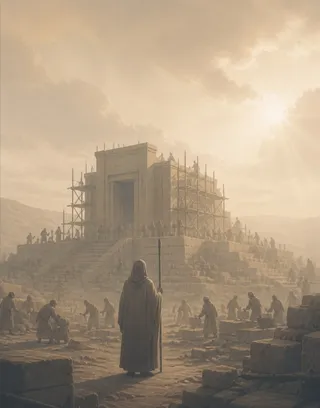
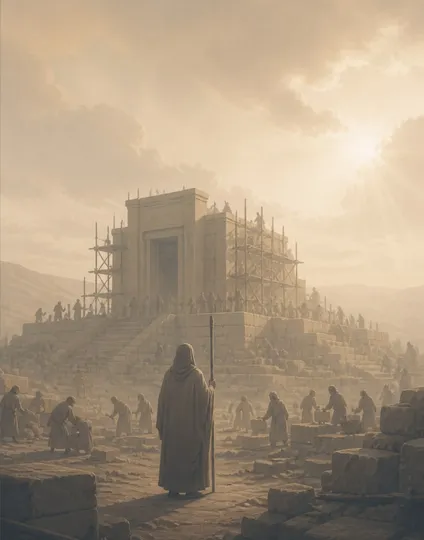
In the first oracle, Haggai asks the remnant to ‘give careful thought their ways.’ They were building their own houses but neglecting the house of God (1: 9). Haggai reminds them of why the harvest is little and a drought had come (1: 11). God commands them through Haggai to build the temple. The whole remnant obeyed the voice of the Lord because God had sent Haggai, and they feared the Lord (1: 12).
The second oracle declared that ‘God was with them (1: 13).’ The Lord stirred up the leaders and the people, and they began the work on the temple within a month of the first oracle.
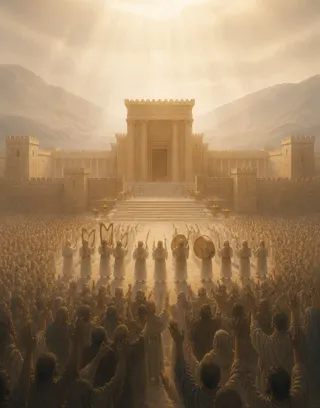
In the third oracle, Haggai asked the people who had seen the glory of the former temple how it looked to them. He told them to be strong, because the Lord would fill the temple with greater glory than it had before. The Lord Almighty was going to grant peace in the temple (2: 9).
In the fourth oracle, God reminds the remnant how he blesses and consecrates, and why things are defiled. Since they had laid the foundation of the temple, from then on, he will bless them (2: 19). The book ends with Haggai telling Zerubbabel that he will be like God’s signet ring. God has chosen him, and the line of David will continue until the coming of the Messiah. The temple was completed in 516 B.C.
Structure
Chapter 1:1–11
You live in panelled houses while this house lies in ruins; consider your ways, and see why the harvest is small.
Chapter 1:12–15
The people obey and fear the Lord, and God says simply: I am with you. Work begins within the month.
Chapter 2:1–9
To those who remember the old temple and are discouraged: be strong, I am with you, and the glory of this house will be greater.
Chapter 2:10–23
A lesson on what defiles, a promise of blessing from this day on, and Zerubbabel made like a signet ring.
Key Themes
01
Everything else was getting built; God’s house was not.
02
A rare thing in the prophets: the people hear and immediately act.
03
I am with you — said twice, and it is the heart of the book.
04
The work looks small to those who remember better days, and God tells them to keep going.
05
Zerubbabel as a signet ring, keeping the Messianic hope alive.
The Challenge We Face
God promises that the glory of this second temple will be greater than the first, and that in this place He will give peace. That modest building is the one Jesus walked into and taught in.
Zerubbabel, made God’s signet ring, appears in both genealogies of Jesus — the line was kept, and the promise held.
Apply Scripture
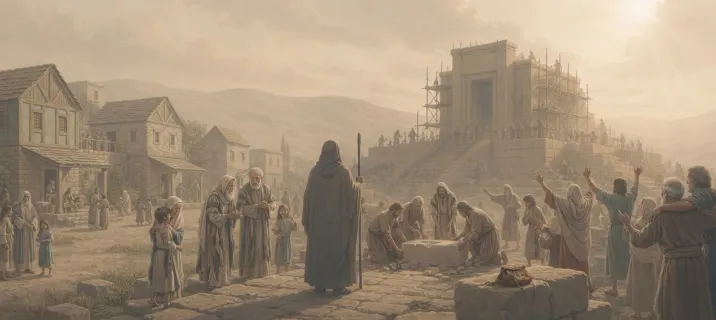
Give careful thought to your ways; look at where your effort actually goes.
Delayed obedience is usually a matter of priority, not ability.
God’s presence is the encouragement He most often gives.
Do not despise a small beginning.
Obedience can start within the month, not the year.
Study guides
You've seen the big picture. Now explore the book verse by verse with our practical Bible Study Guide.
Related Resources