Summary
Hard questions put to God, and a faith that learns to wait.
by Dr. David Silver2 min read
Read the Summaryby Dr. David Silver2 min read
Habakkuk was a minor prophet, and his book was one of ‘The Twelve.’ His name means the wrestler (like the meaning of Israel), and he grappled with the destruction of Judah that God revealed was coming. His contemporaries were Nahum, Zephaniah, and Jeremiah. He authored this book about 606 B.C., soon before the Babylonians invaded Judah; Judah fully went into exile in 586 B.C. First, he complains his own people are wicked and deserve punishment in the first four verses in chapter 1. God answers him that he is sending Babylon to punish Judah for their sins. Habakkuk’s second complaint is why God would use those more wicked than his own people to discipline them. God responds with a verse quoted three times in the NT (Romans 1: 17; Galatians 3: 11; Hebrews 10: 38). This concept was previously noted also in Genesis 15: 6. Then Habakkuk prays and ends up trusting God no matter the outcome (3: 16-19).
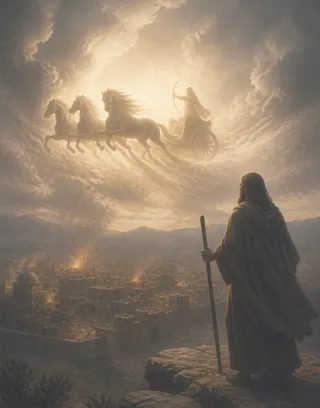
In chapter 1, Habakkuk cries out to the Lord for justice since violence and destruction are before him (1: 2-3). Justice is perverted (1: 3). The Lord graciously answers Habakkuk and tells him he is raising up the Babylonians (1: 6). They will be his instrument to discipline his people, even though Babylon is ruthless, impetuous, dreaded, promotes their own honor, and is bent on violence (1: 6-11). Habakkuk recognizes God’s eternity, holiness, purity, and that he does not tolerate wrong (1: 12-13). He does not understand why God would use these cruel, ungodly people to discipline the people of God.
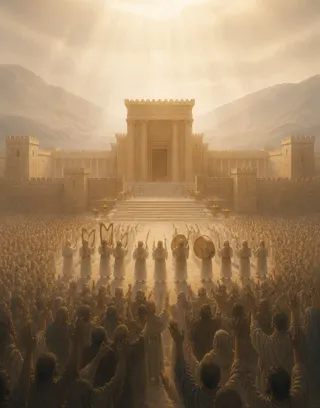
In chapter 2, God acknowledges that the Babylonians are puffed up, arrogant, greedy, and never satisfied (2: 4-5). But they will become victims and be disciplined by the Lord also (2: 7-13, 15-19). But the earth will be filled with the knowledge of the glory of the Lord, as the waters cover the sea (2: 14). But the Lord is in his holy temple; let all the earth be silent before him (2: 20). God is telling Habakkuk that God’s people, the righteous ones must live by faith, despite tough times approaching.
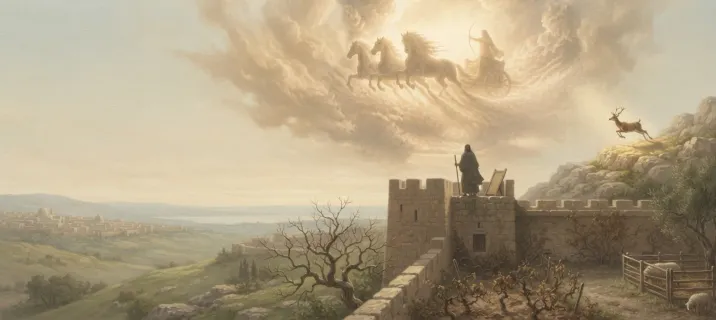
In chapter 3, Habakkuk prays God would in wrath remember mercy (3: 2). Habakkuk surrenders to God’s will because ‘his ways are eternal (3: 6).’ God is creator (3: 8-12) and redeemer (3: 13-15). Habakkuk will wait patiently for the Babylonians to be disciplined (3: 16). Even in his agricultural society, Habakkuk will rejoice and be joyful in the Lord despite loss of crops and livestock. Not only that, but since the Sovereign Lord is his strength, he can run like a deer and soar on the heights (3: 19).
Structure
Chapter 1:1–11
How long must I call for help? God answers that He is raising up the Babylonians.
Chapter 1:12–2:20
Why use people more wicked than we are? God replies that the proud will fall, the righteous will live by faith, and the earth will be filled with the knowledge of His glory.
Chapter 3
Habakkuk recalls God’s past acts, asks that in wrath He would remember mercy, and resolves to rejoice in the Lord though the fields produce nothing.
Key Themes
01
The prophet argues with God and is not rebuked for it.
02
The righteous will live by faith — the verse the New Testament quotes three times.
03
The vision awaits its appointed time; wait for it.
04
Even Babylon serves a purpose it does not understand.
05
Though the fig tree does not bud, yet I will rejoice in the Lord.
The Challenge We Face
“The righteous will live by his faith” is quoted in Romans, Galatians and Hebrews, and it became the hinge of the Reformation’s recovery of the gospel.
Habakkuk’s problem — how can a holy God use the wicked and still be just — is finally answered at the cross, where God is shown to be both just and the one who justifies those who have faith in Jesus.
Apply Scripture
Take your hard questions to God rather than around Him.
Faith often means acting on what God said before you can see it.
God works through circumstances that look like His absence.
Joy can be a decision made in a season of loss.
The Lord is in His holy temple; let all the earth be silent.
Study guides
You've seen the big picture. Now explore the book verse by verse with our practical Bible Study Guide.
Related Resources