Summary
Visions of God's glory, and dry bones brought to life.
by Dr. David Silver3 min read
Read the Summaryby Dr. David Silver3 min read
Ezekiel is a major prophet who was taken to Babylon in the second wave of deportation in 597 B.C. along with ten thousand others. He was a priest who was twenty-five years old when taken from Jerusalem, who began his prophetic ministry at age thirty. He ministered at least twenty-two years while in Babylon. His book is composed of fifty-two oracles, usually preceded by two phrases: the word of the Lord came to me (oral prophecy); the hand of the Lord was upon me (vision given). The book of Ezekiel has the most visions in the OT- the book starts and finishes with visions of God’s glory. Ezekiel can be divided into three sections: chapters 1-24 depict judgment on Judah and Jerusalem; chapters 25-32 speak of judgment on the nations; chapters 33-48 show God’s restoration of his people.
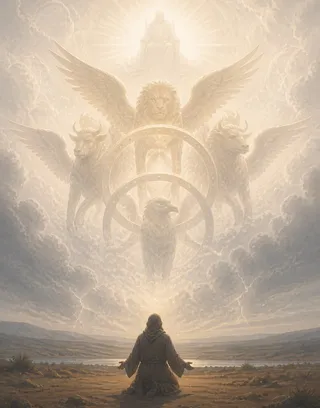
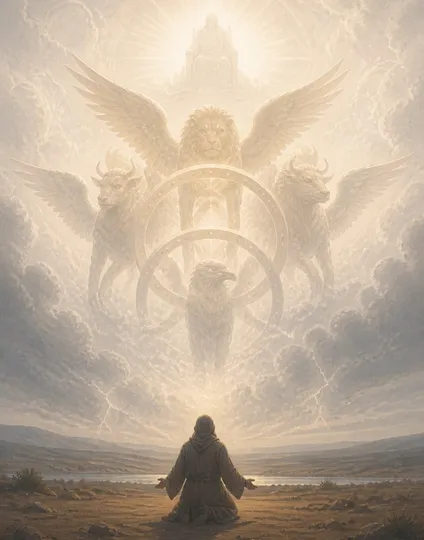
Ezekiel was in Babylon, an exile by the Kebar River, when he saw a vision of God’s glory and chariot. It was surprising for God’s presence to be manifested in Babylon, but we learn in visions in chapters 8-11 that God’s glory departed the temple in Jerusalem due to defilement of the city from Judah’s sins. A messenger would come to the exiles in Ezekiel 24: 26-27 to declare that Jerusalem and the temple had been destroyed (in 586 B.C.). God’s judgment on the nations from chapters 25-32 is consistent with his promise to Abraham to curse those who curse him (Genesis 12: 3).
Not only is Ezekiel given multiple visions, but at times he is required to act out what God is doing. After his calling in chapter 2, he is asked to eat a scroll and then speak to Israel (though they will not listen). He is lifted up by the Spirit (mentioned the most in this book in all the OT) many times and taken to both Babylon and the temple in Jerusalem. In Chapter 4 he acts out the siege in Jerusalem. In chapter 5 he uses a sword to cut his hair, strike it, and scatter it- depicting what will happen to the inhabitants of Jerusalem. He had to strike his hands together and stomp his feet (Ezekiel 6: 11). He had to pack his belongings for exile and dig a hall in the wall (Ezekiel 12: 3-5).
He was given allegories of unfaithful Israel (chapter 16), two eagles and a vine (chapter 17), two adulterous sisters (chapter 22), and a cooking pot (chapter 24). When his wife dies in chapter 24, he is forbidden to grieve. It was a sign to the people that they would lose their delight, the sanctuary. It appears he was not allowed to speak for a time, and then his mouth was opened (Ezekiel 24: 27) He prophesied against the nations and cities of Ammon, Moab, Edom and Philistia in chapter 25; Tyre in chapters 26-28; Egypt in chapters 29-32.
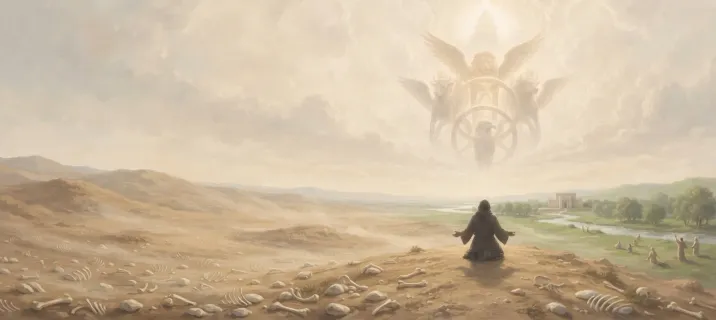
Ezekiel is made a watchman by the Lord in chapter 33. In chapter 37 is the famous dry bones passage. The army of bones resurrected represents renewal, revival, and hope for the exiles despite bleak circumstances. God will bring back the exiles to the Promised Land and a Messianic hope from the line of David is predicted (Ezekiel 37: 24-28). God will pour out his Spirit on the house of Israel (Ezekiel 39: 25-29).
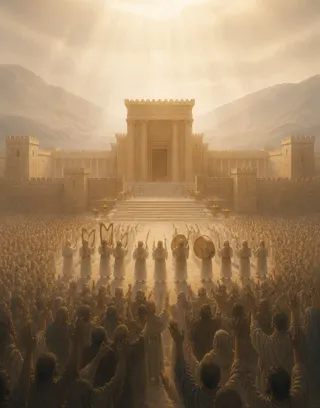
Chapters 40-48 portray a new temple, a picture of Utopia. It is a great vision of the future of Jerusalem. In chapter 43, God’s glory returns to the temple. This new temple is a map of holiness which shows ideal worship. The land is divided in chapters 45 and 48. A miraculous river flows from the temple in chapter 47. Though the Lord had judged his people, now he will be with them. The book ends on that note.
Structure
Chapters 1–24
A vision of God’s glory by a river in Babylon, a prophet who eats a scroll and acts out the siege, and the glory departing the defiled temple.
Chapters 25–32
Oracles against Ammon, Moab, Edom, Philistia, Tyre and Egypt — God curses those who curse His people.
Chapters 33–39
Ezekiel made a watchman, the shepherds of Israel condemned and God Himself promising to shepherd, a valley of dry bones brought to life, and a new heart and a new spirit given.
Chapters 40–48
A measured vision of a restored temple, the glory of the Lord returning to fill it, a river flowing out and bringing life wherever it goes, and a city whose name is The Lord Is There.
Key Themes
01
The book begins and ends with visions of God’s glory; everything between turns on where it is.
02
Judgment falls because the temple and the city have been defiled.
03
The soul that sins shall die; no one is condemned for a parent’s sin.
04
God promises to remove the heart of stone and give a heart of flesh.
05
The Spirit is named more often here than anywhere else in the Old Testament.
The Challenge We Face
God condemns the shepherds who fed themselves and says, I myself will search for my sheep. Jesus answers it: I am the good shepherd.
The new heart and the Spirit put within, promised in chapter 36, are what Jesus tells Nicodemus he must have — to be born of water and the Spirit. And the temple that no longer needs a sun, with a river of life flowing from it, reappears in the last chapter of Revelation.
Apply Scripture
God is present with His people even in exile, far from the temple.
Each person answers for their own life before God.
God does not merely forgive; He replaces the heart that keeps failing.
Dead situations are not beyond the breath of God.
Where God dwells, life spreads outward.

Study guides
You've seen the big picture. Now explore the book verse by verse with our practical Bible Study Guide.
Related Resources