Summary
Justice and righteousness demanded of a comfortable, careless nation.
by Dr. David Silver3 min read
Read the Summaryby Dr. David Silver3 min read
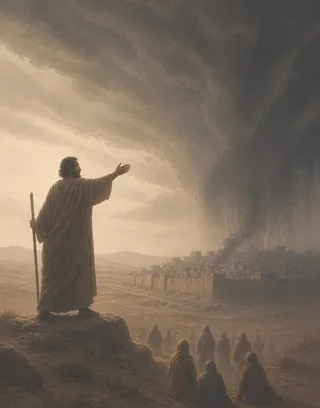
Amos is a minor prophet, and his book is part of ‘The Twelve.’ He is a contemporary of Hosea, Isaiah, Jonah, and Micah. His ministry began about 760 B.C. He is from Judah, but he speaks to the northern kingdom of Israel about their sin and the threat that is coming by the hand of the Assyrians in 722 B.C. Amos thoroughly opposed the wealthy upper class, who during a time of prosperity, were exploiting the poor. His book can be divided into three sections: chapters 1-2 have a poem of judgment against the nations and Israel; chapters 3-6 are covenant lawsuits against Israel; chapters 7-9 are five prophetic visions.
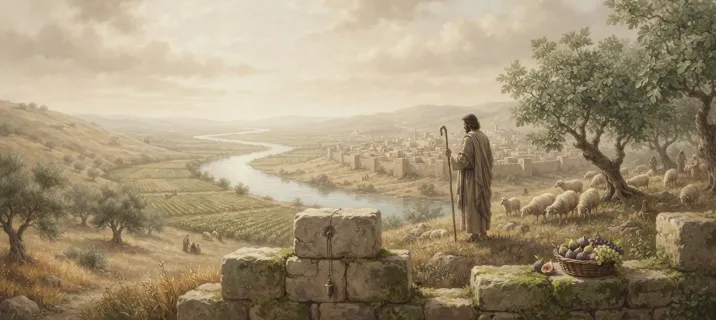
Amos was a shepherd and a dresser of sycamore-fig trees. God called him to prophesy against the northern kingdom of Israel as disaster was looming. The Lord judges the nations surrounding Israel for assorted reasons before he turns to Israel. Aram, Philistia, Phoenicia, Edom, Ammon, and Moab all had done reprehensible atrocities. God was Judge over all the earth, not just Israel. In chapter 2, he also spoke against Judah for rejecting the law of the Lord and worshipping false gods (2: 4). Israel had also incurred the wrath of God by numerous sins including mistreating the poor, sexual sins, false worship, not listening to the prophets, and general disobedience.
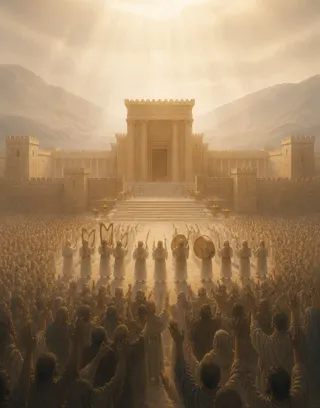
In chapters 3-6 Amos begins the covenant lawsuits against Israel. God will punish them for all their sins (3: 2). In 3: 3-8 Amos lists a series of nine rhetorical questions highlighting God’s warning of coming judgment (God roars like a lion in 3: 8). The Lord reveals his plan to his prophets (3: 7). The Lord is bringing an enemy who will vanquish the land and pull down their idolatrous altars and the houses of the wealthy (3: 11-15). The Lord had disciplined the people in many ways, yet they did not return to him (4: 6, 8-11). In the lament in chapter 5, Amos asks the people to seek the Lord and live (5: 4, 6, 14). The day of the Lord is coming, which will be darkness for them (5: 18, 20). The Lord was not interested in their religious pretense (5: 22-27). Amos pronounces a woe on the complacent (6: 1). They are presumptuous, procrastinators, careless, indifferent, and proud.
The Lord showed Amos five visions in the last three chapters. The first two were a swarm of locusts and fire. They threatened Israel’s welfare. When Amos cried out for God to stop and forgive, the Lord relented. The third vision was a wall with a plumb line. God did not wait for Amos to intercede but pronounced his judgment against Israel: high places will be destroyed and the sanctuary ruined (7: 9). Amaziah the priest came against Amos, but Amaziah has a negative prophecy declared to him (7: 17).
The fourth vision was a basket of ripe fruit, because the Lord will spare them no longer (8: 2). The days are coming when there will be a famine of hearing the words of the Lord (8: 11). In the fifth and last vision, the Lord was standing by the altar (9: 1). The altar will be destroyed along with many people (9: 1-4, 8-10). The concluding five verses describe Israel’s restoration of David’s fallen tent (9: 11). God will bring back his exiled people and plant them in their own land, never to be uprooted again (9: 14-15).
Structure
Chapters 1–2
For three sins, and for four — oracles circle in from Damascus, Gaza, Tyre, Edom, Ammon and Moab, then Judah, and land on Israel.
Chapters 3–6
Nine rhetorical questions, a catalogue of discipline ignored, and woe on those at ease in Zion whose worship God will not accept.
Chapters 7–9
Locusts and fire turned aside by intercession, a plumb line, a basket of ripe fruit, the Lord beside the altar — and a final promise to restore David’s fallen tent.
Key Themes
01
The wealthy prosper by crushing the poor, and God calls it what it is.
02
God hates festivals offered by hands that exploit.
03
He judges Israel’s neighbours and Israel by the same standard.
04
Woe to those who feel secure and are not disturbed by any of it.
05
The book of judgment closes with planting, not uprooting.
The Challenge We Face
At the Jerusalem council, James quotes Amos’s closing promise to rebuild David’s fallen tent so that the rest of mankind may seek the Lord — and applies it to Gentiles coming into the church.
The justice Amos demands and the mercy the gospel brings meet in the one who cared for the poor and who satisfied God’s justice Himself.
Apply Scripture
How a society treats its poor is a spiritual matter.
God is not impressed by worship from people who are unjust all week.
Prosperity can make a person deaf.
God calls the unqualified; Amos was a herdsman, not a prophet’s son.
Seek the Lord and live.
Study guides
You've seen the big picture. Now explore the book verse by verse with our practical Bible Study Guide.
Related Resources