Summary
David's reign, his fall, and the covenant God refuses to break.
by Dr. David Silver2 min read
Read the Summaryby Dr. David Silver2 min read
2 Samuel focuses on the reign of King David, the second half of his life. The first ten chapters cover his triumph and rise to power over all Israel (he ruled over Judah in chapters 1-4). Chapters 11-20 cover his troubles and downfall of sin with Bathsheba, murder of Uriah and the consequences. The book ends with David singing a song of praise in chapter 22 (see Psalm 18). He gives his last testament in chapter 23. After ordering a census of the fighting men, he buys and sacrifices on the threshing floor of Araunah, which was Mt. Moriah, where Abraham went to sacrifice Isaac, and which will later become the site for the temple.
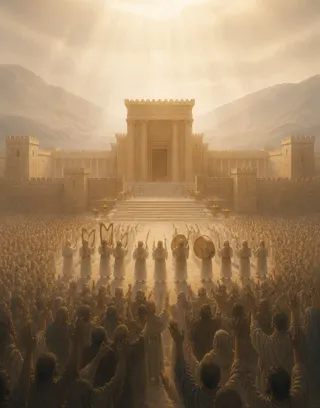
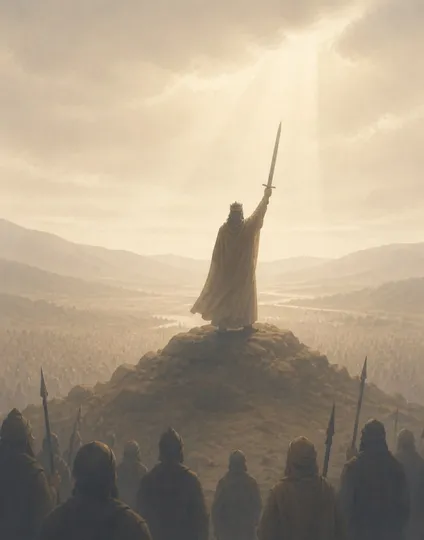
When David hears of Saul and Jonathan’s deaths, he laments. He is anointed as King over Judah and civil war begins between the houses of David and Saul. Eventually, David becomes king over all Israel. He conquers Jerusalem and makes it the capital of the nation. David brought the ark there after a misstep of transporting the ark in an incorrect way and the death of Uzzah for touching the ark.
In chapter 7 (sometimes called the most important chapter in the OT), David has in mind to build the temple. Nathan, the prophet, hears from the Lord and reports back to David that he is not the one to build the temple, but his son. God promises to establish David’s house forever, a clear implication of the coming Messiah. David prays and is thankful for God’s blessing.
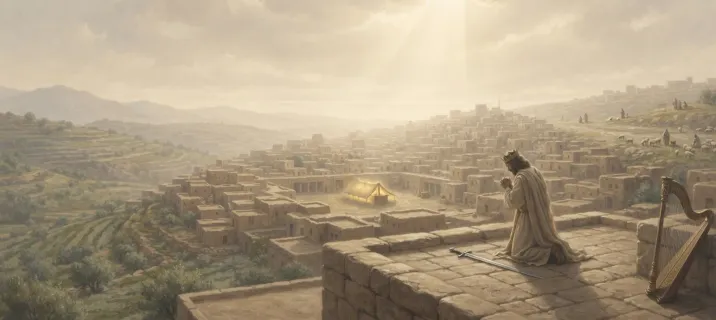
David defeats Israel’s enemies all around. He struggles with his own internal enemy (the flesh), and sins with Bathsheba by committing adultery and then murders one of his own mighty men, her husband Uriah. The judgment he pronounced while Nathan, the prophet, was sharing a story about a greedy, heartless man was the guilty man was to pay back fourfold what he owed. After being confronted by Nathan that he was the man because of his recent sins, he repents. Four of his children end up dying because of these occurrences.
Absolom, one of his sons, ends up murdering his brother Amnon two years after Amnon raped his sister Tamar. Absolom flees, but in time returned to Jerusalem, only to conspire against his father King David. David had to flee from Jerusalem to safety since Absolom had backing from the military. After much anguish, prayers, and intrigue, Absolom is killed in battle and David returns home.
After being restored to the throne, David continues to battle enemies. He is getting older, but his mighty men prevail. He will transition to handing his throne over to Solomon in 1 Kings.
Structure
Chapters 1–10
David laments Saul, is made king over all Israel, takes Jerusalem, brings up the ark, and receives God’s covenant promise of an everlasting house.
Chapters 11–12
Adultery with Bathsheba, the murder of Uriah, Nathan’s parable, and David’s repentance.
Chapters 13–20
Rape, murder, and rebellion inside David’s own family; Absalom’s revolt drives the king out of Jerusalem.
Chapters 21–24
David’s song and last words, his mighty men, and the census that ends on the threshing floor where the temple will stand.
Key Themes
01
God promises David a throne that will never end.
02
God forgives David and still lets the harvest of his sin come in.
03
Confronted by Nathan, David does not excuse himself.
04
David’s instinct, in triumph and in grief, is to sing to the Lord.
05
A king’s private failure becomes a nation’s public wound.
The Challenge We Face
The promise in chapter 7 — a son of David whose throne God will establish forever — is the hinge the rest of the Old Testament turns on. No son of David ever fulfilled it.
The angel tells Mary that the Lord will give her son the throne of his father David, and that of His kingdom there will be no end. The flawed king points past himself to the one the promise was always about.
Apply Scripture
God’s promises do not depend on the worthiness of the person who receives them.
Forgiveness is real, and consequences are still real.
Repentance means agreeing with God about what you have done.
Private compromise does not stay private for long.
Grief and praise can be offered to God in the same breath.

Study guides
You've seen the big picture. Now explore the book verse by verse with our practical Bible Study Guide.
Related Resources