Summary
Two kingdoms drift from God, and exile follows — but mercy is not finished.
by Dr. David Silver4 min read
Read the Summaryby Dr. David Silver4 min read
2 Kings covers from the reign of Ahaziah, the son of Ahab, to the middle of Judah’s exile to Babylon. The first seventeen chapters cover the divided kingdoms of Israel and Judah. Chapters 18-25 cover the surviving kingdom of Judah. Prophets speak to kings to turn them back to the Lord; Elijah, Elisha and Isaiah influence political events.
The book begins with Ahaziah injuring himself and wondering if he would recover. He sends messengers to consult Baal-Zebub, the god of Ekron. Elijah intercepts them at God’s command and sends a message back to Ahaziah that he will die for consulting false gods. Ahaziah send three companies of fifty men to bring Elijah back to speak with him. The first two companies are killed by fire from heaven, but after a humble entreaty and God’s leading, Elijah goes to speak with Ahaziah. Elijah reiterates the message and Ahaziah dies, apparently without repenting.
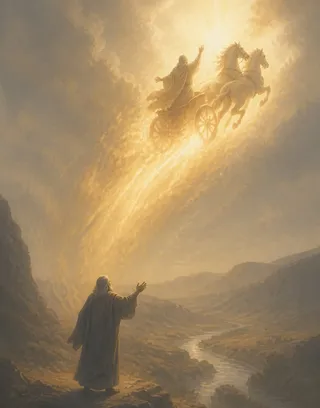
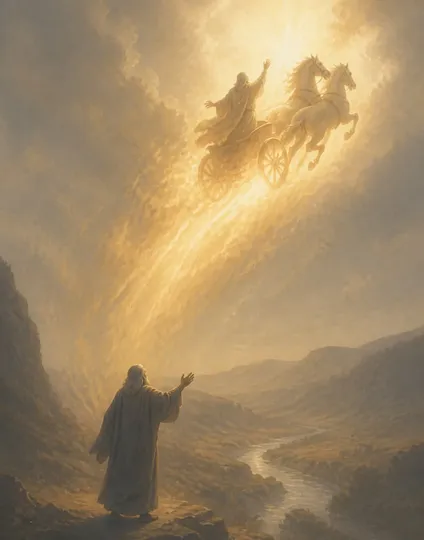
Elijah is taken up to heaven in a whirlwind by a chariot and horses of fire (1 Kings 2:11) after he parts the Jordan with God’s help. This foreshadows the ascension of Christ. Elisha receives a double portion of Elijah’s spirit (Elijah did seven miracles, Elisha did fourteen).
The first half of 2 Kings is filled with Elisha’s exploits including predicting Israel’s victory of Moab (chapter 3), the widow’s multiplication of oil (chapter 4), raising the Shunammite’s son from death to life, neutralizing poisonous food in a pot, feeding one hundred, healing Naaman of leprosy (chapter 5), making an axhead float, defeating an Aramean army single-handedly by blinding them (chapter 6), predicting the lifting of a siege and end of a famine (chapters 6-7), predicting foreign kings, and having Israelite kings anointed. Even after his death and burial (2 Kings 13:20), a corpse came to life when it touched his bones (2 Kings 13:21).
In 2 Kings, ten kings (including Queen Athaliah) were assassinated. Half of them were kings of Israel and the other half kings of Judah. Jehu killed two kings, Jezebel, and Ahab’s family. Hoshea, king of Israel, was removed by Assyria after not paying them tribute and Israel was deported to Assyria in 722 B.C. Then the author explained why these things happened in 2 Kings 17: 7-23.
In 701 B.C., Assyria came to the border of Jerusalem when King Hezekiah was reigning. They threatened to attack and besiege them, but Hezekiah prayed and consulted Isaiah. Hezekiah spread out an enemy letter before the Lord at the temple and prayed; an angel of the Lord went out that night and killed a hundred and eighty-five thousand men in the Assyrian camp. They retreated. After that, Hezekiah developed a life-threatening illness and after crying out to the Lord, God used Isaiah to heal him. He received comfort from the king of Babylon regarding his illness, and he showed his envoys everything in his palace. Isaiah told him that in the future everything would be carried off to Babylon (2 Kings 20: 16-18).
Hezekiah’s son, Manasseh, succeeded him. He reigned fifty-five years but was one of the evilest kings in Judah’s history. He committed idolatry, sorcery, divination, worshipped idols, shed innocent blood and led Judah astray. Despite repenting in the end of his life, and a revival that his grandson Josiah led (chapters 22-23), the die was cast. Josiah’s son Jehoahaz became king for three months until Pharaoh Neco removed him and sent him to Egypt, where he died.
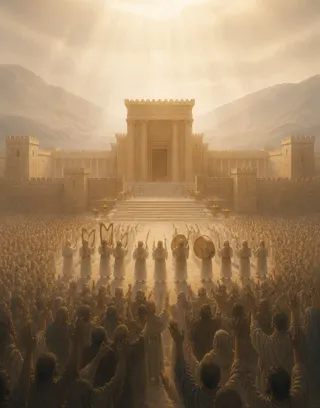
Jehoiakim (another son of Josiah) was made king in his place, and he reigned for eleven years. During this time Babylon’s king Nebuchadnezzar invaded the land and eventually Jehoiakim rebelled against him. He was taken to Babylon where he died. His son Jehoiachin reigned for three months, until he surrendered to the Babylonians. Jehoiachin’s uncle, Zedekiah, ruled after that for eleven years. He eventually rebelled against Babylon and was captured, blinded, and taken to Babylon where he died. Babylon destroyed most of Jerusalem, including the wall and the temple at this time (586 B.C.) Jehoiachin, who had surrendered, was released from prison in the thirty-seventh year of the exile (561B.C.). He sat at the king’s table and was treated with honor until his death. This ending gave hope that Israel would rise again.
Structure
Chapters 1–8
Elijah is taken up in a whirlwind, Elisha receives a double portion, and a long succession of miracles follows — oil, a raised son, Naaman’s healing, a blinded army.
Chapters 9–17
Jehu’s purge, a string of assassinations, and the deportation of the northern kingdom to Assyria in 722 BC, with the writer explaining exactly why.
Chapters 18–21
Hezekiah prays and Assyria is turned back; Manasseh reigns fifty-five years and leads Judah into its worst idolatry.
Chapters 22–25
Josiah finds the book of the law and reforms the nation, but Babylon comes, Jerusalem and the temple are destroyed in 586 BC, and the book ends with a king released from prison.
Key Themes
01
Prophets, not armies, drive the history of these chapters.
02
God sent prophet after prophet; the exile is not sudden, it is refused mercy.
03
Hezekiah spreads the enemy’s letter before the Lord, and the siege is lifted.
04
Josiah’s revival is real and does not undo what Manasseh set in motion.
05
The last paragraph is a king eating at the table of his captor — the line of David is still alive.
The Challenge We Face
Elisha’s ministry — feeding a hundred from a little, cleansing a leper, raising a dead boy — reads like a sketch of what Jesus would do, and Jesus names Naaman the Syrian when He preaches in Nazareth.
The book ends in exile with the Davidic line reduced to one man alive in Babylon. That thread, deliberately left hanging, is picked up in Matthew’s genealogy.
Apply Scripture

God warns long before He judges.
Bring the thing that threatens you to God and lay it out before Him.
A nation, or a life, can be changed by rediscovering Scripture.
Spiritual damage done by one generation can outlast it.
Even in judgment, God keeps a thread of hope alive.

Study guides
You've seen the big picture. Now explore the book verse by verse with our practical Bible Study Guide.
Related Resources