Summary
The temple, the kings, and what happens to a nation that forgets its God.
by Dr. David Silver4 min read
Read the Summaryby Dr. David Silver4 min read
2 Chronicles continues the story of Israel’s kings beginning with Solomon (chapters 1-9; chapters 2-8 emphasize the temple) with a focus on the kings of Judah since it was written in the post-exilic period to give hope to the nation of Israel. Periods of revival are expounded under Asa (chapters 14-16), Jehoshaphat (chapters 17-20), Joash (chapters 23-24), Hezekiah (chapters 29-32), and Josiah (chapters 34-35).
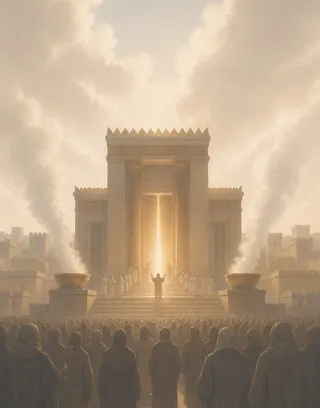
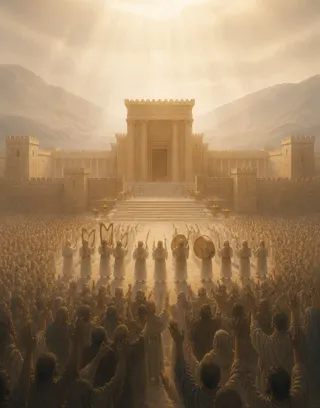
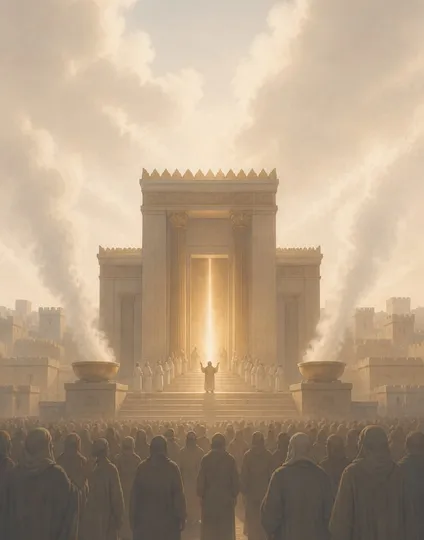
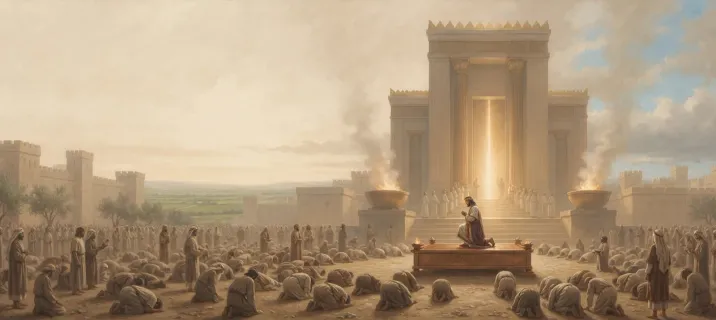
Solomon asked for wisdom after God asked him what he wanted. He built the temple and gave a prayer of dedication in chapter 6. In chapter 7, fire came down from heaven and consumed the burnt offering, and the glory of the Lord filled the temple (v.1). The Lord appeared to Solomon and said he heard his prayer. Part of his response is the most well-known verse in the book. The Chronicler emphasizes Solomon’s strengths, just like he did for his father David in 1 Chronicles.
The kingdom is divided under King Rehoboam, Solomon’s son. When he and the people abandoned the law of the Lord, Shishak, king of Egypt, attacked Jerusalem. Rehoboam and the leaders humbled themselves (2 Chronicles 12:6) and they were not destroyed.
Rehoboam’s grandson Asa became king after his father Abijah died. Asa commanded Judah to seek the Lord and to obey his laws (2 Chronicles 14: 4). Asa prayed to the Lord in a battle against the Cushites and the Lord struck them down (2 Chronicles 14: 12). Asa brought other reforms such as removing idols, repairing the altar at the temple and making a covenant to seek the Lord. Asa’s heart was fully committed to the Lord all his life (2 Chronicles 15: 17).
Jehoshaphat, his son, succeeded him as king. His heart was devoted to the ways of the Lord (2 Chronicles 17: 6). He did ally himself with King Ahab in Israel and almost got killed in battle despite the prophet Micaiah’s warning. King Ahab was killed, and Jehu the seer rebuked Jehoshaphat for that alliance. Then he turned people back to the Lord and appointed judges and priests to serve the Lord. When attacked by the Moabites and Ammonites, he cried out in prayer, “We do not know what to do, but our eyes are upon you (2 Chronicles 20: 12).”
Joash, after being protected as a child by the priest Jehoiada, became king at age seven and reigned for forty years. He repaired the temple and did good all the years Jehoida was priest. Unfortunately, after Jehoiada died, Joash turned away from the Lord.
Joash’s son, Amaziah, reigned for twenty-nine years and did what was right, but not wholeheartedly. His son, Uzziah, became king and reigned for fifty-two years. He had a well-trained army. But after he became powerful, his pride led to his downfall (2 Chronicles 26: 16). After burning incense unlawfully, he broke out with leprosy, which he had until his death. His son Jotham became king and reigned sixteen years, doing what was right. His son, Ahaz, became king for sixteen years and did not do what was right.
Hezekiah, his son, succeeded him as king and reigned twenty-nine years. He opened the temple again and made repairs. The service at the temple was reestablished (2 Chronicles 29: 35). He encouraged a great Passover celebration. He reinstated tithing, festivals, and Sabbaths. He sought his God and worked wholeheartedly. And so he prospered (2 Chronicles 31: 21). After all this, Assyria came and attacked Judah. King Sennacherib sent letters to Hezakiah and the people of Judah insulting the Lord. King Hezekiah and Isaiah cried out to God in prayer and an angel of the Lord annihilated all the fighting men and the leaders in the enemy camp (2 Chronicles 32: 20-21). Hezekiah was also healed of a near death illness.
Manasseh, his son, succeeded him as king. He did much evil. After being taken prisoner by Judah’s enemies, he sought God’s favor and humbled himself greatly before God. God restored him. Manasseh’s son Amon became king after his father’s death, and he was assassinated after reigning two years.
Amon’s son Josiah became king at age eight. He reigned thirty-one years. The book of the law (possibly Deuteronomy) was found in the temple during his reign. After hearing it read, he tore his robes and brought about great reforms: he reinstated the covenant with God, removed all the detestable idols, celebrated the Passover, and set the temple in order. Josiah died in a battle with Pharaoh Neco.
Judah was attacked by Babylon and sent into exile. Jerusalem and the temple were destroyed in 586 B.C. (2 Chronicles 36: 19). Persia came to power and Cyrus became king. He made an edict to allow the remnant in exile to return to Jerusalem and build the temple again. The book of 2 Chronicles and the OT end on that note of hope.
Structure
Chapters 1–9
Wisdom asked for and given, the temple built and dedicated, fire from heaven and the glory filling the house.
Chapters 10–20
The kingdom splits under Rehoboam; Asa and Jehoshaphat seek the Lord and lead the first reforms.
Chapters 21–32
Kings rise and fall, Joash repairs the temple and then abandons the Lord, and Hezekiah reopens the house of God and prays Assyria away.
Chapters 33–36
Manasseh’s evil and late repentance, Josiah’s reforms after the law is found, and the fall of Jerusalem — closing with Cyrus telling the exiles to go home.
Key Themes
01
The house of God is the centre of the nation’s life, and its state tells you the nation’s state.
02
The verb runs through the book: those who seek Him are found by Him.
03
Kings who humble themselves — even Manasseh — are restored.
04
Five times the nation turns back, and each turning begins with a leader.
05
The Old Testament closes here on a decree to go home and rebuild.
The Challenge We Face
The temple is the point of the book, and every revival in it is a return to the place where God meets His people through sacrifice.
Jesus stands in that temple and says that if it is destroyed He will raise it in three days — speaking of Himself. The meeting place the Chronicler loved was a sign of the person in whom God and His people meet for good.
Apply Scripture
Revival starts with people humbling themselves, not with a programme.
Seek God and you will be found by Him; abandon Him and He lets you go.
Faith that depends on a mentor can collapse when the mentor dies.
Pride undoes people at the height of their strength.
It is never too late to humble yourself; Manasseh proves it.
Study guides
You've seen the big picture. Now explore the book verse by verse with our practical Bible Study Guide.
Related Resources