Summary
Living as exiles with hope, and grace that holds through suffering.
by Dr. David Silver3 min read
Read the Summaryby Dr. David Silver3 min read
1 Peter is a NT epistle written by the apostle Peter in the early 60’s to churches in Asia Minor that were predominantly Gentile. He exhorts the believers to endure persecution and suffering and not to be surprised by it, as even Jesus himself set an example in this area. Peter wants the church to know the true grace of God and to stand fast in it (5:12). As S. McKnight (1996: 36) puts it, “Peter intends his readers to understand who they are before God so that they can be who they are in society.”
Christians must learn how to engage the culture no matter the time and place. Also, Peter stresses it is better to suffer than to sin. A helpful outline is: called to salvation (1:1-2:10); living as strangers in a hostile world (2:11-4:11); enduring suffering (4:12-5:11).
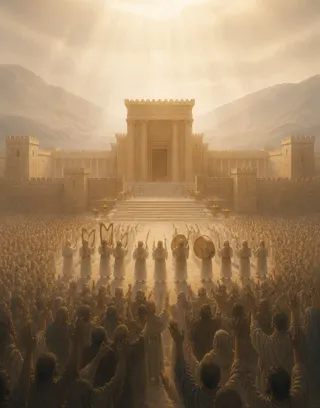
Peter reminds the church about their calling to salvation right from the introduction of the letter. He calls them God’s elect (1:1). They are also chosen according to the foreknowledge of God (the Trinity are all involved in this). In God’s great mercy he gave the new birth (1:3). They have an inheritance that can never perish, spoil, or fade- kept in heaven for those who through faith are shielded by God’s power until the coming of the salvation to be revealed in the last time (1:4-5). Trials have come to prove their faith genuine (1:7). They are receiving the salvation of their souls (1:9). They are to set their hope fully on the grace to be given when Jesus Christ is revealed (1:13). Because of this they are to be holy because God is holy (1:16). They were redeemed through the precious blood of Christ (1:18-19). Peter encouraged them to grow up in their salvation (2:2). They are a chosen people, a royal priesthood, and a holy nation (2:9).
Since the believers are aliens and strangers in the world, they are to abstain from sinful desires and live good lives among the pagans (2:11-12). They are to submit to authorities (2:13). Slaves are to submit to their masters and endure suffering for doing good (2:16-20). Wives were to submit to their husbands and to live the faith without words with their husbands because in that culture the wife was to join the husband’s religion and she was not to humiliate him. Husbands were to be considerate with their wives and respect them (3:7). With Christ as Lord, the believer is to be prepared to give the reason for their hope, with gentleness and respect (3:15). The Christian is to choose suffering rather than sin (4:1-6). The church is to love one another and to use the gifts of serving and speaking for the common good.
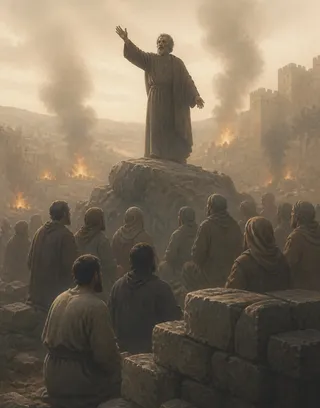
Christians are not to be surprised by suffering, but rather to rejoice that they participate in the sufferings of Christ. If insulted, the believer is blessed (4:14). If one suffers as a Christian, they are not to be ashamed, but praise God that they bear that name (4:16). Elders are to be shepherds and set an example, for they were liable to persecution in their leadership role. Satan is often behind persecution, so believers are to be alert (5:8-9). After the believers have suffered, the God of all grace will restore, strengthen, and make them steadfast (5:10).
Structure
Chapters 1:1–2:10
A living hope through the resurrection, an inheritance kept in heaven, faith refined by fire, and a people called to be holy — a chosen race and a royal priesthood.
Chapters 2:11–4:11
Live such good lives among the pagans that they glorify God; submission, marriage, suffering for doing good, and always ready to give a reason for your hope.
Chapters 4:12–5:14
Do not be surprised at the fiery trial; elders charged to shepherd willingly; humble yourselves and cast your anxiety on Him, for He cares for you.
Key Themes
01
A living hope, set fully on the grace to be given when Christ is revealed.
02
Strangers and sojourners here, which explains both the pressure and the calling.
03
Expected, not abnormal — and shared with Christ.
04
Be holy, because the one who called you is holy.
05
Good lives and gentle answers as the church’s argument to a watching world.
The Challenge We Face
Peter holds up the suffering of Christ as both the ground of salvation and the pattern for believers: He committed no sin, and when He suffered He made no threats, but entrusted Himself to Him who judges justly.
He bore our sins in His body on the tree, so that we might die to sins and live for righteousness — by His wounds you have been healed. Peter is quoting Isaiah 53 and applying it to his readers’ Monday morning.
Apply Scripture

You have a hope that nothing in this life can spoil.
Suffering for doing good is not a sign something has gone wrong.
Be ready to explain your hope, with gentleness and respect.
It is better to suffer than to sin.
Cast your anxiety on Him, because He cares for you.

Study guides
You've seen the big picture. Now explore the book verse by verse with our practical Bible Study Guide.
Related Resources